
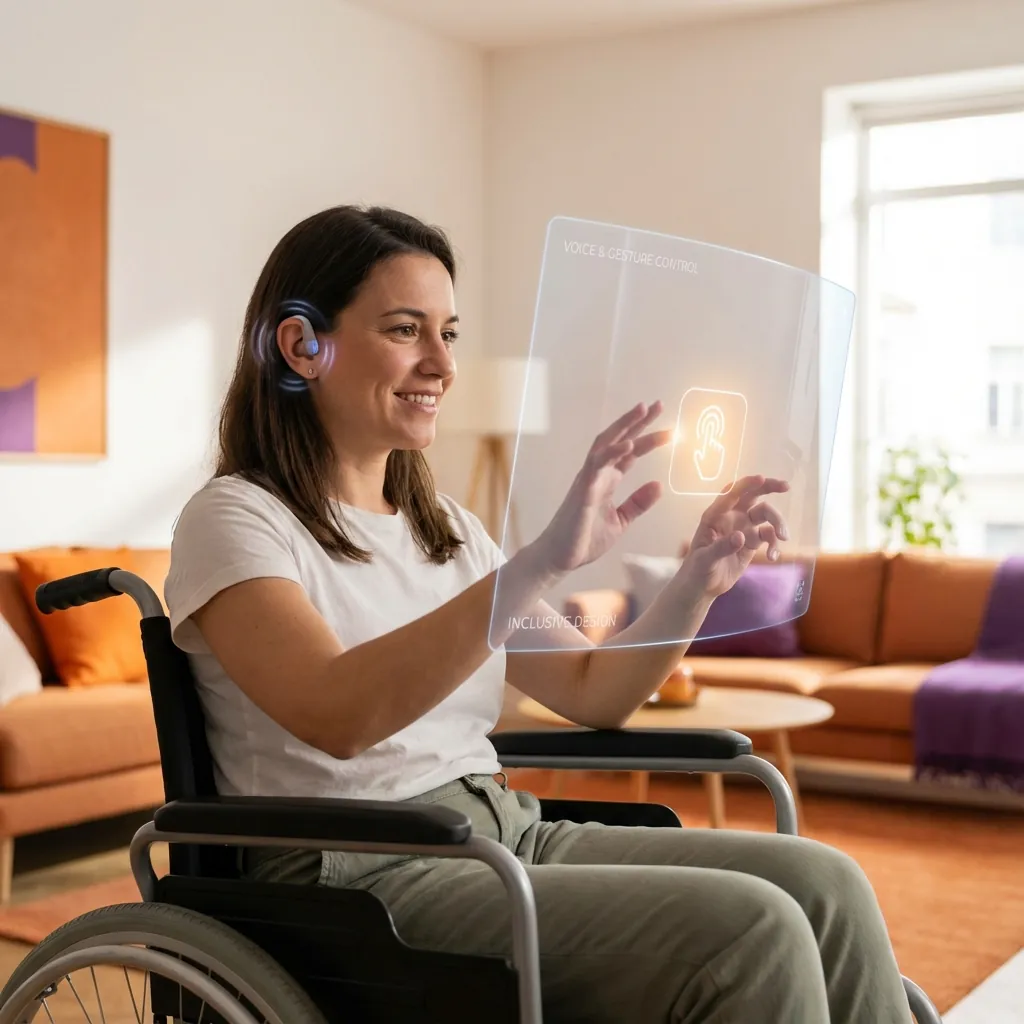
Accessible tech requires multimodal inputs like voice, gesture, eye-tracking, and low-latency edge compute. We prototyped adaptive layouts that increase target sizes and contrast based on motor ability and vision needs, and we leaned on on-device speech models that tolerate dialectal variety without round-trips to the cloud.
We tested haptic cues as a redundant channel for critical alerts, added offline fallbacks for intermittent connectivity, and built a settings wizard that asks about comfort preferences up front instead of burying them in menus.
The takeaway: accessibility is not a bolt-on. It is a product foundation that improves UX for everyone, with faster surfaces for power users, clearer affordances for new users, and resilient behavior when networks are unreliable.
Related evidence